How to achieve better learning results through individual adjustments
Do you also ask yourself why it is so important to support your employees in their further development in our fast-paced world? 🤓
Today, our working world and job profiles are developing and changing rapidly. According to a Hays study from 2022, 28% of employees need to constantly upskill and 36% very frequently in order to do their jobs properly. It is therefore all the more important that your company's employees want to learn new skills effectively and enjoy learning in order to keep up with the rapid pace of development.
However, this also means that different employees have different learning styles. 👀

Do traditional learning approaches take into account the individual needs of each learner? 📝
No, traditional approaches are based on the "one-size-fits-all" approach. In a world full of different types of learners, abilities and interests, it's time to move on from this approach. These learning approaches cannot be tailored equally to all people and situations, and there is no one solution or method for every learner.
What do "traditional learning approaches" and the "one-size-fits-all" approach actually mean in practice? 📏
This refers to established methods and models of teaching that have often been used over many years. These approaches are often characterized by a structured, curriculum-based approach. Here, the focus is not on the learners, but on the teacher who wants to impart knowledge to the students. An example of this is teacher-centered teaching, where the teacher plays the main role in the lesson and is responsible for imparting knowledge and monitoring the students' learning progress. It follows a uniform, standardized curriculum that is the same for all students in the class. All learners receive the same content and follow the same learning progression. 📃
.png)
The criticism of these methods is that they do not take enough account of individuality, because every person has different needs and preferences, which must also be taken into consideration when learning. This is why traditional learning methods are being replaced from time to time by new, personalized approaches, but what is meant by a "personalized learning environment"? 🤔
Definition: personalized learning environment
Imagine being able to learn at your own pace, choose exactly the content that interests you the most and use learning methods that suit your individual learning style. Doesn't that sound great? This is exactly the approach of the personalized learning environment, where the learning process is adapted to individual needs, abilities, interests and learning styles. 👥
It is about creating a customized learning experience that enables learners to use their strengths, take on challenges and develop their own learning potential. The differences between learners are taken into account in a personalized learning environment to make the most of their abilities. 💪🏽

But how does it actually work? Don't worry, we'll show you how individual adjustments and a personalized learning environment can lead to optimal learning results and how you can use it for yourself and your company. 💃🏽
Because one thing is for sure: with personalized learning environments, you can take your learning journey to a whole new level. It's no longer just about absorbing knowledge, it's about creating a passionate and engaging learning experience that is tailored to your individual employees. ✂️
There are a lot of different learning styles and types. You probably remember this from your school days. Perhaps you are someone who memorizes everything in your head while listening to lectures or do you need certain stimuli such as pictures, graphics or symbols to memorize learning material? Does this sound familiar to you? These are different learning types, which we would like to show you below. 😊

Learning types and individual learning styles
Everyone has individual preferences and approaches when it comes to learning and there are different ways to absorb learning material. Considering individual learning styles and learning types can have a significant impact on the effectiveness of learning. Here are some of the most common learning types and their characteristics:
Visual learner: Learners benefit most from visual aids, such as graphical representations, diagrams and presentations. The use of visual stimuli makes it easier for them to absorb and understand information. In order to achieve their learning goals, it is advisable to offer them visually appealing materials and interactive presentations. 👀

Auditory learner: They learn best by listening to and discussing content. They prefer listening to lectures, discussions, audio books or creating memory aids in the form of voice recordings. By giving them the opportunity to actively participate in training and express their opinions, they can develop their full potential. 👂🏽
Reading/writing learner type: Learners prefer to write notes and summaries in order to process information. They benefit from written materials such as books, guides and training materials. By having access to such content and the opportunity to record their thoughts in writing, they internalize the knowledge much better. 📖
Kinesthetic learner: Learning through practical experience and action is most effective for this type. They benefit from workshops, role plays and practical exercises. What they learn is consolidated particularly well when it is applied directly and practical challenges are overcome. 🛠️
Attention! Learning styles are only basic to understand, as most people have a combination of different learning styles, but one particular style stands out. By recognizing these different learning styles, companies can create personalized learning environments that better meet the individual needs of learners. 😎

By adapting to preferred learning styles, learners can be optimally supported in their learning environment. This contributes to increased motivation, better understanding and more effective learning experiences. To support employees in their learning, there are learning approaches and methods that suit the respective learning styles.
Use of different learning approaches and methods
The use of different learning approaches and methods enables learners to reach their full potential, utilize their individual strengths and develop a deeper understanding. A variety of learning approaches creates a dynamic and stimulating learning environment in which learners can learn actively and effectively. We will now show you what these approaches are:
Cooperative learning/active learning: The focus here is on active participation and collaboration in the learning process. Understanding is deepened through the exchange of ideas, knowledge and perspectives, critical thinking and problem-solving skills are encouraged and social skills are developed. What is learned is consolidated particularly well in a group environment. This learning approach is particularly suitable for auditory learners . 🫂

Experiential learning: The principle of "learning through experience" encourages learners to actively participate in practical tasks, experiments or real-life situations in order to acquire knowledge and skills. Through direct experience, learning outcomes can be better internalized and practical application skills can be developed. The kinaesthetic type of learner learns best through this method. 🔨
Gamification: The use of playful elements in the learning process increases learner motivation and engagement through competition, goal setting and rewards, making learning more interactive and fun. Gamification can integrate movement, interaction and action-oriented tasks, which supports the kinaesthetic learner accordingly. 🕹️

Adaptive learning: This method uses technology to adapt learning to the individual needs and progress of each learner. By analysing learning data and providing personalized content, exercises or feedback, learners can learn at their own pace and thus improve their learning outcomes. 🚗
Important! People are usually enthusiastic about several learning methods and also combine several learning types. There is therefore no one learning method that suits a single learning type.
The use of different learning approaches and methods allows learners to choose their preferred learning pathways and play to their strengths. The variety of learning methods also covers a wider range of learning objectives so that different skills and competencies can be developed. Blended learning is also an important learning approach, as it combines online and face-to-face teaching. 🔗

What is blended learning?
Blended learning is an educational approach based on the combination of traditional face-to-face teaching and digital or e-learning. A mix enables an individual learning experience and takes different types of learners into account.
The aim is to utilize the advantages of both learning environments: The personal interaction and structure of traditional teaching is combined with the flexibility and accessibility of e-learning. This allows learners to learn at their own pace while receiving support and guidance from a teacher. 🎢

We would like to introduce you to 3 models of the dynamic and versatile blended learning approach:
1. the focus of face-to-face teaching is on direct contact on site between teacher and student. There is time for discussions, group work, practical exercises and direct feedback. Therefore, there are approximately one to four face-to-face sessions, which are repeated, for example, with an online learning unit, so that what has been learned can be better internalized. 🏫
2 In online lessons, the focus is on e-learning. The learning journey begins with a digital unit, followed by a shorter face-to-face phase. E-learning can be delivered through videos, quizzes, digital resources and other interactive activities. It allows learners to learn at their own pace and with complete flexibility, giving them the opportunity to repeat the material as often as necessary. 💻
3. the flipped classroom is a teaching model that reverses the traditional teaching structure. New content is first worked through independently at home, often through video lectures or texts. Attendance time is then used for in-depth activities such as discussions and exercises, with the teacher providing support and guidance. This model encourages active student participation and enables teachers to offer targeted support. Online and face-to-face time are usually divided equally. 🔄

Overall, the blended learning model leverages the strengths of each method to increase student engagement and participation, promote individualized learning paths and provide students with the necessary skills and competencies. However, successful implementation of this approach requires careful planning, as well as appropriate access to technology. 💭
Therefore, providing a suitable platform for learners is crucial, as they should be motivated and committed to learning new knowledge. Have you already discovered a suitable learning platform for you or would you like to change your current provider? Then Memberspot is the right place for you. 🤩
We offer a unique, uncomplicated relocation service that moves all learning content for you completely free of charge! All videos, descriptions, texts, thumbnails and file attachments are transferred, so you can get started with your course in no time at all. 📦

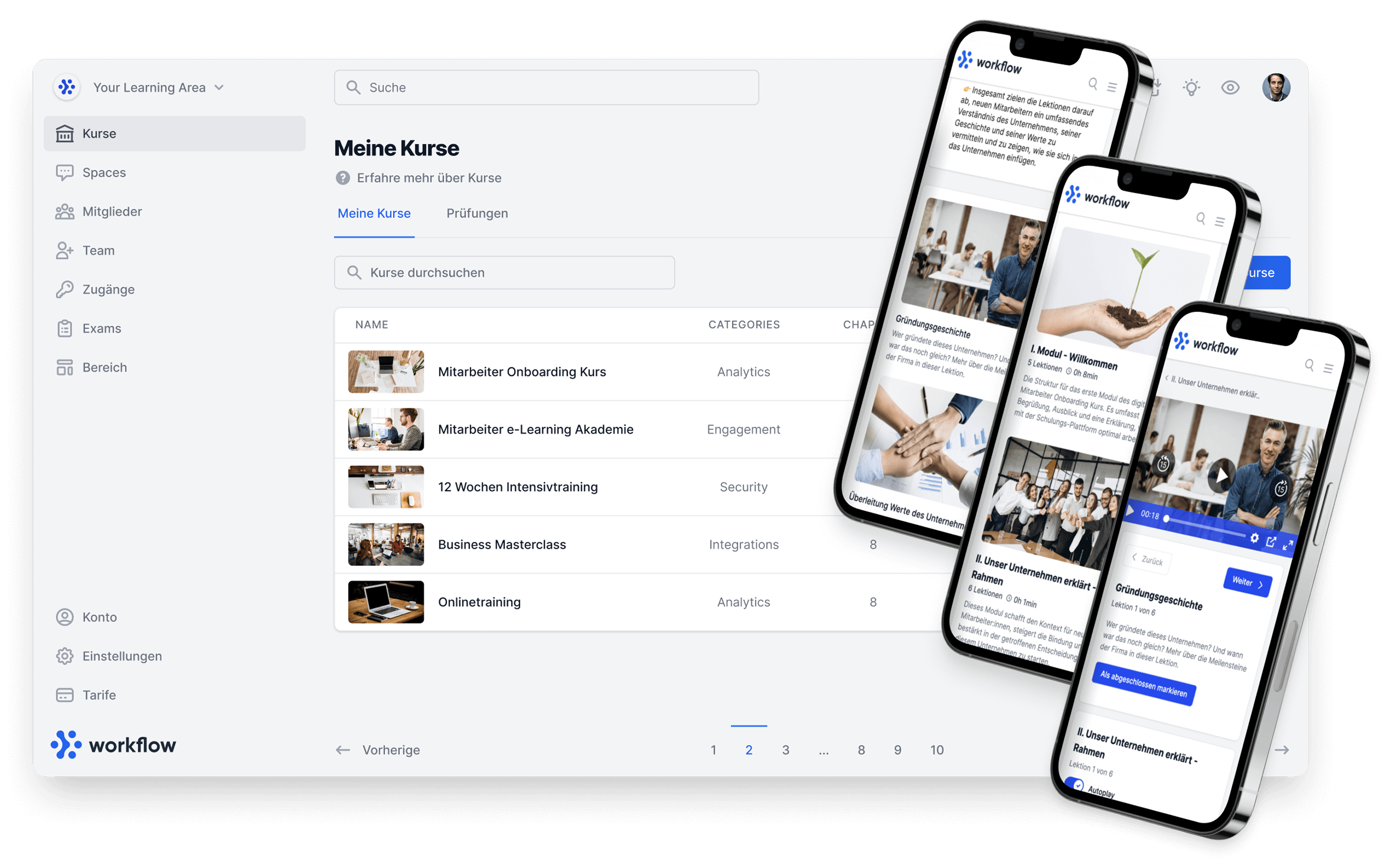
With Memberspot, you can easily create and manage courses. The intuitive operation allows you to create a clear course structure and high-quality online training courses in no time at all, without any prior technical knowledge. Even new employees can quickly find their way around the platform thanks to the clear user interface. You can create engaging and informative training content in no time at all, effectively supporting the onboarding of new employees. 🤝🏽
Would you like to try the tool yourself? ✏️
Then simply click on this link and you will be taken to our free 14-day trial version.
With Memberspot it is possible to adapt learning content to the needs of your users, because this aspect is one of the most important for introducing personalized learning methods. ⭐
Adaptation of the learning content and learning format to individual needs
Adapting the learning content and format to individual needs is the focus of a personalized learning environment. The aim is to make the learning process as effective and motivating as possible for each learner. 🎨

The learning content can be tailored to the needs of each individual by providing different resources based on the learner's learning objectives, interests and current level of understanding. Advanced learners receive more challenging materials, while struggling learners receive additional support and practice materials. 📕
The learning format should be adapted to suit different learning styles and preferences. A diverse range of learning formats such as videos, audios, interactive activities or texts allows learners to use their preferred methods. 🎥
With Memberspot, you also have the option of choosing between different lesson formats, such as video, audio, text, PDF, quizzes or exams and certificates. You are therefore completely free to choose what suits the needs of your users. With these functions, you bring variety to the learning journey and can carry out learning checks through exams. This is not only interesting for you, but also for the learner, so that they can independently recognize which topic they should repeat or where they need support. 🧠

Not all students learn at the same pace, so it is important to adjust the learning speed individually. Some will need more time to understand the material, while others will progress faster and want more challenge. Personalized learning environments offer students the flexibility to learn at their own pace. ⏱️
Technology also plays an important role in the learning process. A learning platform can be used to track the learners' level of knowledge and adapt the learning material based on their performance and existing difficulties. This enables an individualized and tailored learning process. 🖥️
Individualized learning increases learner motivation and achieves better learning outcomes. A balanced approach that is tailored to the needs of the individual is an important component to ensure that all learners are equally motivated. Personalized learning is also a good way for companies to respond individually to their employees and motivate them. 🌟
Is it possible to adapt the learning environment in your company to the needs of your employees?

Integration and development of a personalized learning strategy in the company
Employee learning and development can be significantly improved by integrating a personalized learning strategy into your business.
Is a personalized learning environment also possible in your company? 🤨
Personalization of training courses in the corporate learning context
The personalization of training in companies is certainly possible and can even lead to significant improvements. By adapting the learning content and learning process to the individual needs and abilities of each employee, learning can be made more efficient and effective. 🖌️

The use of technologies such as learning management systems (LMS), artificial intelligence (AI) and data analysis tools can play a crucial role here. These tools can help to create personalized learning paths, track learning progress and provide data-driven feedback. 💬
Another important aspect is taking into account the individual learning styles and preferences of employees. Some people learn best through visual aids, others through listening or hands-on activities. By using different learning methods and formats, you can reach a wider range of employees and help them to better understand and retain the learning content. They also enable flexible learning, which means that employees can learn at their own pace and on their own schedule. 🗓️
Despite the challenges that can be associated with personalizing training within the company, it is an actionable and promising investment. Personalization can help to increase employee satisfaction and retention in the long term, improve performance and ultimately contribute to the success of the company. To benefit from a personalized learning environment in your company, there are a few steps to consider. 👣
How do you implement the introduction of personalized learning in your own company?

5 steps to developing a personalized learning strategy for companies
Developing a personalized learning strategy for companies requires thoughtful planning and implementation. Here are some steps that can help in developing such a strategy:
1. needs analysis: Identify the individual learning needs and goals of your employees. You can achieve this through employee surveys, performance appraisals and discussions with managers. 🔎
2. technology selection: Choose the right technologies and platforms to help you create personalized learning experiences. This can include LMS, AI, data analysis tools and e-learning platforms. 📱
3. content creation: Develop learning content that is tailored to the needs of your employees. This can include the use of different learning formats and media to accommodate different learning styles. 📖
4. personalized learning paths: Create individual learning paths that are adapted to the specific needs and goals of each employee. To achieve this, you can combine different learning activities, materials and resources. 🪧
5. promote a culture of learning: Promote a culture of lifelong learning in your company by emphasizing learning and development as significant aspects of the corporate culture. 💡
%20(1).png)
These 5 steps can help you develop an effective and efficient personalized learning strategy for your company that will help improve your employees' skills and knowledge as well as your overall business performance. To implement this concept, you need tools on which you can deliver your e-learning and your employees can always access it. Therefore, it is important to use the ideal learning platform that meets your needs. 👌🏽
Use of technology and digital tools for personalized support
The use of technology and digital tools can play a crucial role in the implementation of personalized learning environments.
Artificial intelligence makes it possible to analyze learning data. Based on this data, tailored recommendations for learning content and activities can be offered. AI can also be used to create adaptive learning programs that automatically adjust to the learner's progress. 🤖

Use an e-learning platform to provide a variety of learning resources, such as online courses, webinars, videos, quizzes and other interactive content. The platforms enable flexible learning and create a customized learning experience. 🤸🏽
Learning can be integrated into everyday life with mobile technologies. Mobile apps promote learning because learners have the opportunity to learn anytime and anywhere. In addition, the apps can also have functions such as reminders and notifications, which ensure that learners are reminded of their content and deadlines. 📱
In addition, analyzing and collecting data on the learning activities and progress of learners is an important point. Data can then be used to gain insights into the learning habits and preferences of learners and adapt learning activities accordingly. 📊

The Memberspot platform gives you the opportunity to offer a customized app that provides your employees with a flexible learning experience. Your app enables access to course content from anywhere and at any time. This allows you to offer a modern and personalized learning experience and take your training courses to a whole new level. 🔝
You can also define your own design. Your colors and logos convey a certain seriousness to employees and customers and create trust, because your branding is in the foreground and is immediately recognized by users. You also benefit from clear analysis tools that track member behavior. Thanks to these functions, you always know whether and where your employee is getting stuck and can intervene directly to provide them with the best possible support. 🎓
By using an e-learning platform and adapting it to the needs of your employees, you not only increase their motivation, but also the effectiveness of your company. Personalized learning therefore has a number of advantages, which you can find out about in the next section.

Advantages of personalized learning in companies
Personalized learning offers various benefits aimed at both learners and your company.
Here are some of them:
1. learning effectiveness: employees can specifically develop their competencies and skills relevant to their individual roles and responsibilities by having access to customized learning content and resources. 🔑
2. increase employee motivation: employees can actively shape their learning process and tailor it to their interests. As a result, they feel more involved and are more motivated to drive their learning forward. Employees who feel that their development and growth are encouraged are generally more engaged and satisfied with their work. 📈
3. self-directed learning: employees have the opportunity to make better use of their learning time and focus on the areas that are most relevant to their role. This also avoids unnecessary time wasted going over content that has already been mastered. This leads to an optimized use of learning resources and enables more efficient skills development. 🛞

4. flexibility: learners can learn at their own pace, choose the learning material that best suits their learning style and adapt their learning environment to their personal needs. In addition, they can organize their learning times and locations flexibly, which is particularly beneficial for employees who work remotely or flexibly. 🚀
5. improved access: with technology often used to support personalized learning, learners can access learning materials anytime, anywhere, massively increasing accessibility. 🗝️
6. personalized feedback: Employees receive individual feedback on their performance. It helps them to recognize their strengths, identify weaknesses and make targeted improvements. 📣
7. promotion of lifelong learning: Lifelong learning and the continuous development of employees promotes the learning culture in your company. Employees are encouraged to continue their education and acquire new skills in order to meet the constantly changing requirements and challenges of the working environment. 🌱

Despite these benefits, personalized learning requires careful planning to ensure that all employees are adequately supported and have access to high-quality learning resources. 🧐
The key to successful personalization of learning
Personalized learning environments contribute significantly to maximizing the learning potential of each individual. Customization of learning materials and methods enables more effective learning. It also helps learners to capitalize on their strengths and address their weaknesses, leading to an overall better understanding of the learning content. 🪄
The precise planning of the e-learning strategy plays a crucial role in the implementation of the personalized learning environment. Technology and digital tools enable the provision of customized learning paths, feedback and adaptable content that takes into account the needs of the individual. 🗣️

The key to successful personalization is to take into account individual differences and unique learning styles of learners. By adapting the learning process to them, you can create an environment in which learners are more engaged and motivated, which also significantly improves their understanding of the learning content. 👍🏽
In addition, the integration of such personalized learning environments in companies offers significant benefits, including improved performance, greater employee satisfaction and a stronger focus on continuous learning and development.
employees are also motivated to acquire new knowledge, because the individuality makes them feel taken seriously by you as an employer. 💎
We hope you enjoyed reading it. 📚
Best regards
Your Memberspot Team



%20V1.webp)

%201.png)